Prior authorization (PA) has become one of the most significant hurdles for medical practices nationwide, and nowhere is this more evident than in dermatology. While dermatologists focus on diagnosing and treating conditions that affect a patient’s skin, hair, and nails, their teams often spend an outsized amount of time battling insurers for approvals. From high-cost biologics to everyday treatments misclassified as cosmetic, dermatology practices face unique challenges in navigating the insurance maze.
These challenges not only drain staff resources but also delay critical care for patients who often present with painful, visible, or progressive conditions. Understanding the barriers and how to overcome them can help dermatology practices maintain efficiency, improve patient satisfaction, and protect revenue streams.
What to Expect in This Article
For dermatology practice administrators, this article provides a roadmap of today’s prior authorization landscape. We’ll start by highlighting the most common dermatology treatments that trigger PA requests, then dive into the unique challenges dermatologists face when dealing with insurers. From there, we’ll explore the complexity factors that make dermatology PAs particularly difficult, examine the impact on daily operations, and conclude with strategies and solutions that can help practices stay ahead.
To set the stage, let’s begin by examining the specific dermatology treatments most commonly subject to prior authorization. Understanding which services trigger PAs most often helps administrators prepare their teams and anticipate hurdles before they arise.
Common Dermatology Treatments That Require Prior Authorization
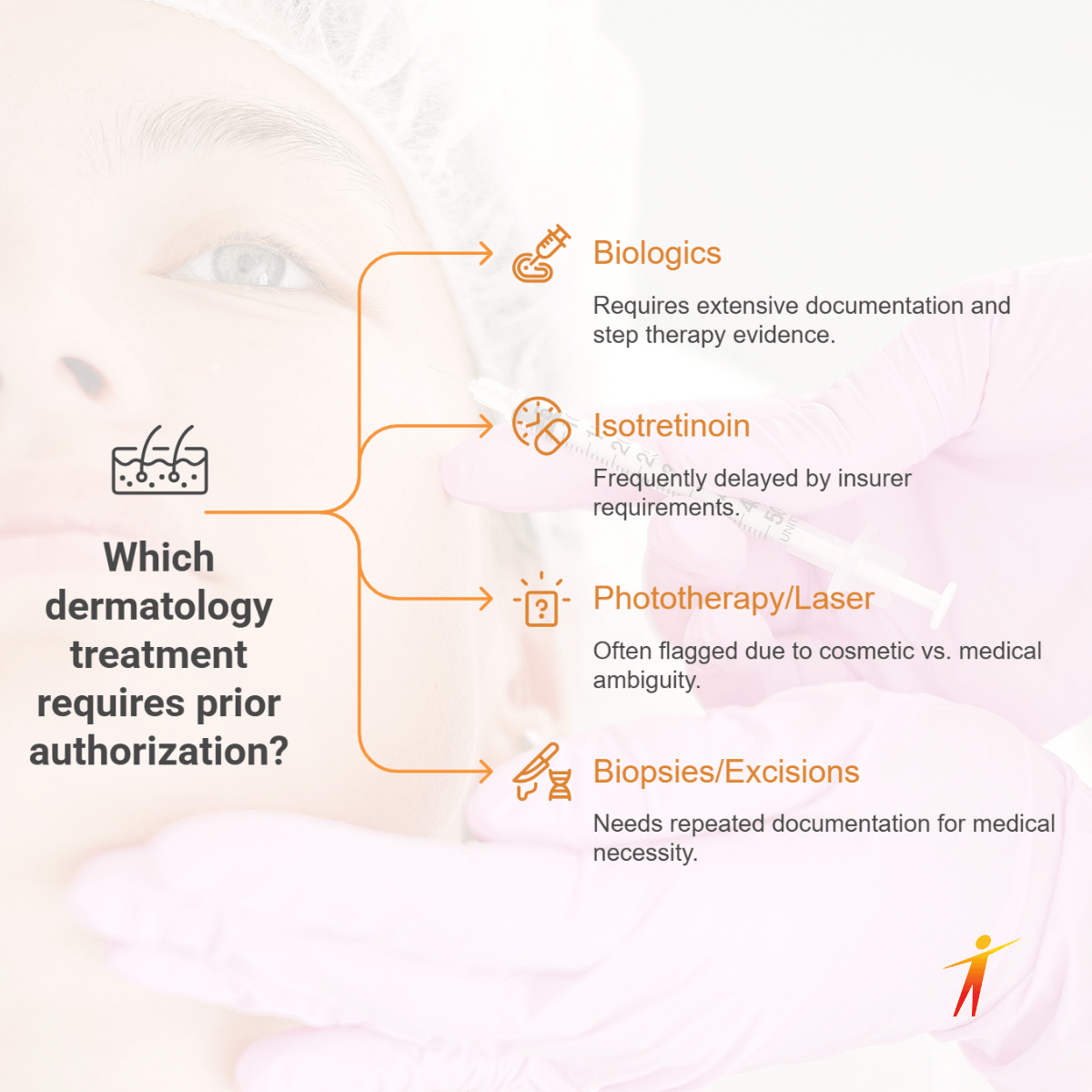
Insurers often use prior authorization to control costs and prevent unnecessary treatments, but in dermatology, it frequently creates delays for even routine care. Some of the most common dermatology services requiring prior authorization include:
- Biologics for psoriasis and eczema: Medications like Humira, Cosentyx, and Dupixent often require extensive documentation and step therapy evidence before insurers approve coverage.
- Isotretinoin for severe acne: Even when clinically necessary, isotretinoin prescriptions are frequently delayed by insurer requirements.
- Phototherapy and laser treatments: Treatments that fall into the grey area of cosmetic versus medical care are often flagged for PA.
- Biopsies and excisions: While essential for diagnosing and treating skin cancers, these procedures can require repeated documentation when insurers question medical necessity.
The result: administrative staff often spend hours compiling clinical notes, filling out forms, and appealing denials, leaving less time for direct patient support.
For professionals in dermatology, recognizing these treatments is only the first step. The real challenge comes when navigating the administrative and payer-related obstacles that make approvals so difficult. Let’s now examine the hurdles unique to dermatology prior authorizations—and why a dermatologist might consider a prior authorization service.
Challenges Unique to Dermatology Prior Authorizations
While many specialties deal with PAs, dermatology has a distinctive set of hurdles that make the process especially burdensome.

1. High Denial Rates Due to Cosmetic vs. Medical Classification
Insurers frequently deny dermatology claims by categorizing treatments as “cosmetic” rather than medically necessary. For patients with severe acne, scarring, or autoimmune-related skin conditions, this can feel like an arbitrary barrier to care.
2. Documentation Burden
Insurers often demand step therapy documentation—proof that a patient has failed cheaper topical treatments before being approved for biologics. This requires extensive charting and detailed submission of past treatments.
3. Delays in Care
Skin conditions are often urgent. A patient with worsening psoriasis or suspicious moles cannot afford weeks of waiting for insurer approvals. Yet, delays are common, leading to disease progression, patient anxiety, and sometimes more costly treatments later.
4. Patient Frustration and Leakage
Patients who experience repeated delays or denials are more likely to leave a practice, which can negatively impact patient retention. Frustrated patients often blame the provider, even though the real issue lies with the payer.
To bring these challenges into perspective, consider the following scenario:
Real-Life Example: A psoriasis patient has tried multiple topical treatments without success. Their dermatologist prescribes a biologic, only to be met with an insurer’s demand for step therapy documentation spanning years of prior treatment. Weeks pass while staff compile records and respond to repeated requests. During this time, the patient’s symptoms worsen, their frustration grows, and the practice’s staff are tied up in administrative back-and-forth instead of patient care. This scenario is all too common in dermatology and illustrates how PAs directly affect both clinical outcomes and practice efficiency.
This example highlights the daily realities dermatology practices face and sets the stage for a deeper look at why the system is so complicated. Let’s now turn to the insurance complexity factors that make prior authorization in dermatology especially challenging.
Insurance Complexity Factors in Dermatology
The PA process in dermatology is made even more complex by the inconsistent and constantly changing rules across insurers.
- Varied Insurer Policies: Each insurer has its own requirements, creating inconsistency and confusion for staff.
- Step Therapy Requirements: Patients are often required to try and fail multiple lower-cost options before gaining access to advanced therapies.
- Voluntary Insurer Reforms: In June 2025, more than 50 major insurers pledged to reduce PA requirements and standardize electronic submissions. While promising, these reforms are voluntary and will take years to implement, leaving practices stuck in the meantime.
- Technology Gaps for Small Practices: Smaller dermatology practices often lack the resources or staff to keep up with rapidly evolving payer requirements, EHR updates, especially for dermatologists using ModMed, and electronic submission platforms.
These factors combine to create a system in which dermatology practices, particularly those with limited staff, often find themselves overwhelmed by administrative work.
Impact on Dermatology Practices
The effects of prior authorization extend far beyond paperwork—they reshape the entire practice environment. For instance, consider a small dermatology clinic with just two providers and limited administrative staff. When multiple biologic prescriptions and procedure requests require PA at the same time, the team is forced to divert hours away from patient interaction to chase insurer approvals. This real-life pressure point illustrates how these systemic barriers affect day-to-day operations, leading to the broader impacts practices face.
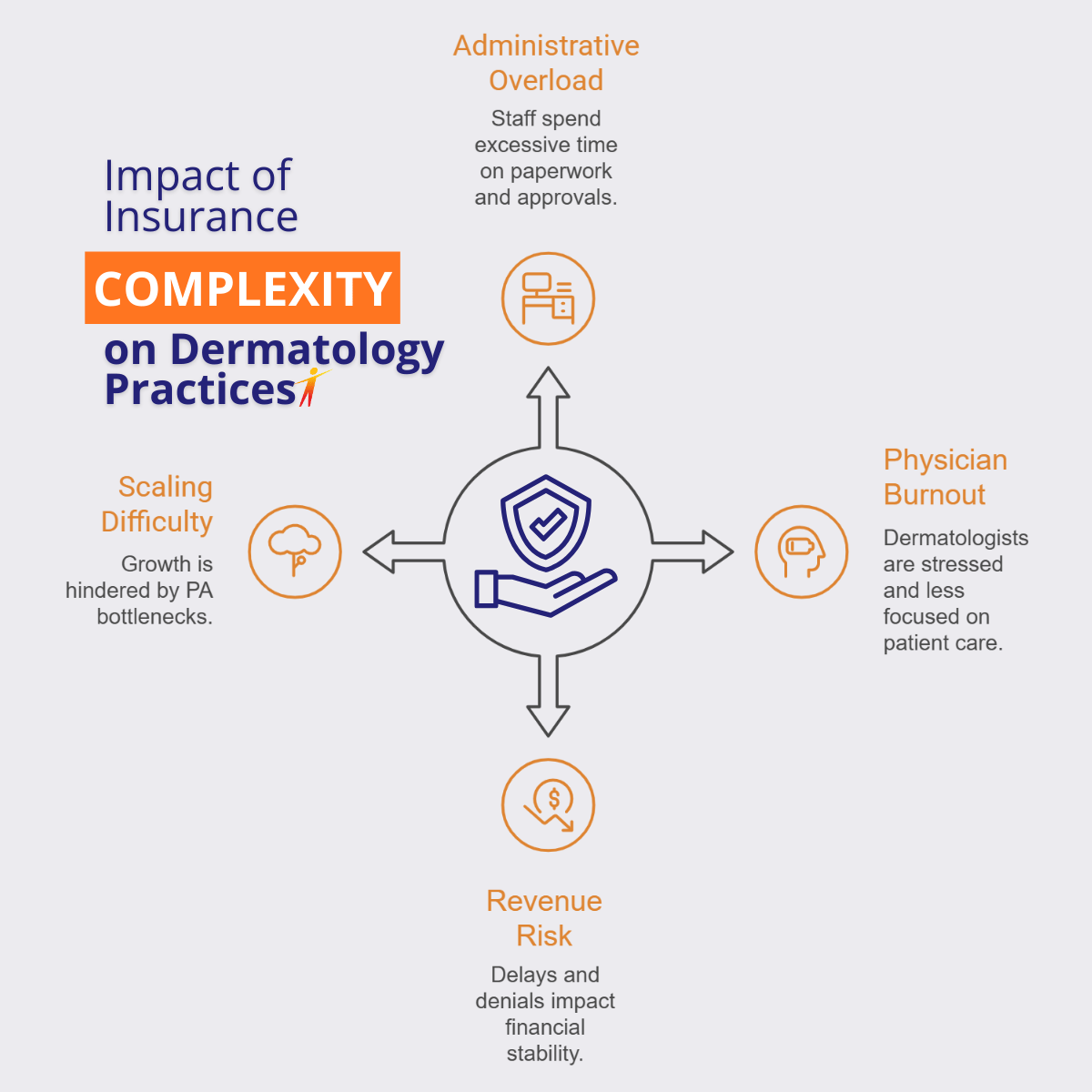
- Administrative Overload: Staff spend countless hours chasing approvals, pulling records, and following up with insurers.
- Physician Burnout: Dermatologists increasingly find their time spent fighting denials instead of focusing on patient care.
- Revenue Risk: Denials and delays can directly impact practice revenue, as treatments are delayed or claims remain unpaid.
- Scaling Difficulty: For growing practices, PA bottlenecks create barriers to expansion, making it harder to see more patients or open new locations.
In short, prior authorization is more than an inconvenience; it’s a critical operational challenge that affects practice performance, staff morale, and patient trust.
How DataMatrix Medical Helps Dermatology Practices
At DataMatrix Medical, we understand that dermatology practices face some of the steepest prior authorization challenges in healthcare. That’s why our solutions are designed to alleviate these burdens and enable providers to focus on what matters most: patient care.
- Dedicated PA Specialists: Our teams handle the entire process, from submission to follow-up, reducing staff burden and improving approval rates.
- EHR-Agnostic Support: We integrate seamlessly with your workflows, regardless of which EHR system your practice uses.
- Faster Turnaround: With proven processes, we expedite approvals, allowing patients to begin treatment without unnecessary delays.
- Proven Results: Our clients see 99%+ approval rates and save over 50% compared to in-house PA staff.
- Scalable Expertise: Whether you’re a solo dermatologist or a multi-location group, our services scale with your needs, giving you flexibility without added hiring costs.
By removing the administrative bottleneck, DataMatrix helps dermatology practices operate more efficiently, reduce denials, and deliver a better patient experience.
Conclusion
Dermatology practices face a perfect storm of prior authorization challenges: treatments that straddle the line between cosmetic and medical necessity, complex and inconsistent insurance policies, and rising concerns around biologic prior authorization denials and specialty therapies. These obstacles create administrative overload, physician burnout, and patient dissatisfaction.
While insurer reforms are on the horizon, they are not a cure-all. The complexity of prior authorization is here to stay, especially in specialties such as dermatology, where insurers closely scrutinize treatments.
Partnering with a trusted provider like DataMatrix Medical ensures your practice doesn’t get left behind. With expert support, streamlined workflows, and industry-leading approval rates, dermatologists can focus on delivering exceptional care while we handle the red tape.
Ready to simplify your dermatology prior authorizations? Contact DataMatrix Medical today to learn how we can help your practice save time, reduce denials, and improve patient care.

Nathaniel Smathers is the VP of Client Education and Marketing. He is also a long time contributor of the DataMatrix Medical blog and has a background in healthcare content creation for over a decade. Nathaniel is passionate about exploring the intersections of healthcare, data analysis, and digital innovation.