The Paradox of Modern Administration
We are currently living through a paradox in healthcare administration. On one hand, practices are drowning in paperwork and facing staffing shortages that are still up 60% compared to 2019. On the other hand, the adoption of AI has jumped 40% in the last year alone, promising to automate everything from phone calls to charting.
But for the average practice administrator, the reality lies somewhere in the messy middle. When does it make sense to keep a process in-house for total control? And when does it make sense to hand it off to partners who can leverage AI and scale faster than you can hire?
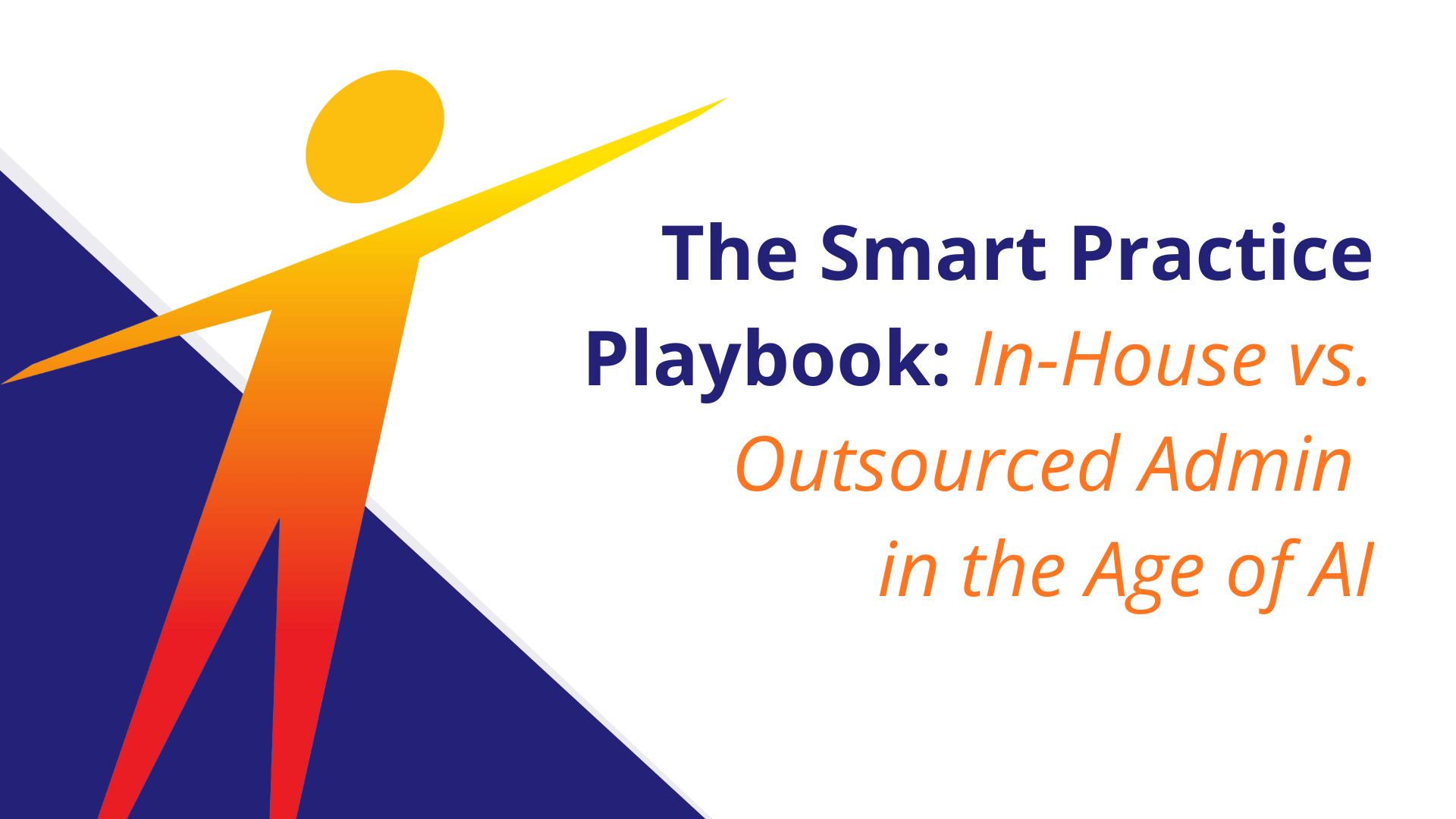
At the recent ModMed Momentum conference, DataMatrix Medical’s VP of Marketing & Client Education, Nathaniel Smathers, moderated a panel titled “The Smart Practice Playbook.” He was joined by three industry veterans: Tracey Schmidbauer (OrthoNY), Danielle Shults (OrthoNY), and Nichole Alley (Orthopaedics East).
Here are the top three takeaways from their debate on building a resilient, hybrid practice.
1. The “Turnover Rule”: When to Outsource
One of the most complex decisions for an administrator is determining what to keep in-house. Nichole Alley, a Practice Administrator with an HR background, shared her “math-based” approach. She examines explicitly turnover rates and the “misery index” for a given role.
Her rule is simple: If a department has high turnover and the staff are unhappy because the work is tedious, like with Prior Authorizations, outsource it. You generally cannot pay people enough to enjoy battling insurance companies all day.
However, for roles that require a “human touch,” like the front desk, she keeps those in-house. She compares it to the “Walmart Greeter” concept, patients need a human face to welcome them, even if technology handles the transaction.
2. The AI Reality Check: Oversight is Mandatory
While vendors often promise that AI will replace Full-Time Employees (FTEs), the panel agreed that AI is currently a tool that creates efficiency, not a total replacement.
Danielle Shults, an IT Specialist, emphasized that whether you are using offshore, co-sourcing, or AI automation, security and compliance must come first. You cannot simply “plug in” AI and walk away.
Relying too heavily on automation can backfire. Tracey, during the conversation, confirmed and reinforced what we already knew: that payers are now using their own AI to issue denials, which has increased the workload on the back end. Nichole added that her team now has to fight “auto-downcoding” by insurance algorithms, requiring human staff to challenge every single claim to “teach” the payer’s AI that the practice won’t accept incorrect denials.
3. Co-Sourcing vs. Outsourcing: The Culture Shift
A significant concern with outsourcing prior authorizations is its impact on company culture. Tracey shared that at OrthoNY, they shifted the language from “outsourcing” to “co-sourcing”.
This subtle change signaled to the internal team that the external partners were there to help, not replace. By offloading the “garbage work” (like chasing referrals or sitting on hold), the internal staff felt relieved rather than threatened. Danielle added that empowering internal staff to act as liaisons and auditors for the outsourced team gives them autonomy and ownership over the process.
Watch the Full Discussion
The “Smart Practice” isn’t about choosing between humans and AI; it’s about finding the right hybrid model that creates resilience.
If you want to hear the whole debate, including specific strategies for handling provider buy-in and calculating the actual cost of labor, you can access the full session below.
Watch the Panel Discussion on YouTube
Download the “Smart Practice” Presentation PDF
Are you struggling with the staffing and administrative burdens discussed in this panel? DataMatrix Medical specializes in the “co-sourcing” model that OrthoNY and Orthopaedics East utilize. Contact us today to learn how we can support your Intake, Pre-Charting, and Prior Authorization workflows.

Nathaniel Smathers is the VP of Client Education and Marketing. He is also a long time contributor of the DataMatrix Medical blog and has a background in healthcare content creation for over a decade. Nathaniel is passionate about exploring the intersections of healthcare, data analysis, and digital innovation.