
What’s in a word? Scribing or Transcription? What’s the difference? Understanding the distinctions between medical transcription and medical scribing is essential to grasping these services unique roles in healthcare documentation.
Both are integral to ensuring accurate patient records but entail different responsibilities and skill sets. This guide will explore these services’ definitions, differences, and similarities, the education required, and their impact on the healthcare industry.
Whether you are considering a career in one of these fields or seeking medical transcription or medical scribes, this resource will help you navigate the available options and identify the most suitable fit, whether you need orthopedic medical scribes or scribe service for family medicine.
Overview of Medical Transcription and Medical Scribing
Both medical transcription and medical scribing are essential to healthcare documentation. They ensure the accurate maintenance of patient records, which supports healthcare professionals in delivering optimal patient care.
For example, medical transcription at DataMatrix Medical involves converting audio files or handwritten notes from dictation into detailed written clinical notes. In contrast, Our medical scribe service emphasizes real-time documentation during patient encounters, capturing the complexities of medical terminology and physician dictation as they happen.
Both roles are key to improving workflow efficiency and data accuracy within healthcare settings, elevating the overall standard of care and administration.
Definitions and Roles
Medical transcription refers to the process of converting dictated audio files from healthcare providers into written text. This service is essential for maintaining accurate clinical notes and patient records and ensures healthcare professionals have precise documentation for communication and continuity of care.
In contrast, medical scribes assist clinicians by documenting patient encounters in real-time during examinations. While both roles require a strong grasp of medical terminology, transcriptionists typically work independently, focusing on audio recordings at their own pace.
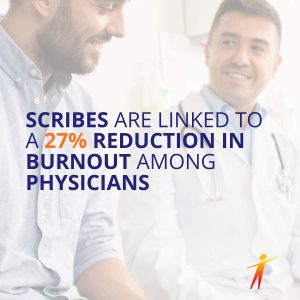
Conversely, medical scribes collaborate directly with physicians and patients, capturing vital information during consultations. Their role significantly enhances the efficiency of documentation practices, ultimately improving patient outcomes. Medical scribes are linked to a 27% reduction in burnout among physicians across multiple specialties.
Differences Between Medical Transcription and Medical Scribing
Understanding the distinctions between medical transcription and medical scribing is crucial for those entering the healthcare documentation field or are in search of a service to improve a doctor or a practices efficiencies. Each role has specific job functions that address different administrative needs within healthcare settings.
Job Functions and Responsibilities
Medical transcriptionists’ primary responsibilities involve reviewing audio recordings, transcribing clinical notes, and ensuring the accuracy of patient records. This role demands a keen attention to detail and a comprehensive understanding of medical terminology, and it ensures that all data entered into electronic health records (EHR) is accurate and up to date.
Medical scribes, on the other hand, thrive in high-pressure environments where they capture essential information during consultations. They manage real-time documentation and uphold patient confidentiality. Both positions require strong organizational and communication skills. They serve critical functions within the healthcare ecosystem by supporting accurate documentation.
Education and Training Requirements
The education and training requirements for medical transcription and medical scribing can differ significantly and are different from independent scribes and transcriptionists and scribing or transcription companies.
Medical Transcription
Standard education requirements for medical transcriptionists typically include the following:
- High School Diploma or GED: This is the minimum educational requirement for entry into the field.
- Postsecondary Training or Certification: Many medical transcriptionists pursue formal education or certification programs from community colleges, vocational schools, or online programs. These programs often last six months to a year and cover subjects such as:
- Medical terminology
- Anatomy and physiology
- English grammar and punctuation
- Healthcare documentation standards
- Transcription technology and software
- Certification (Optional but Beneficial): Though not always required, obtaining certification can enhance job prospects. Recognized certifications include:
- Certified Medical Transcriptionist (CMT): Offered by the Association for Healthcare Documentation Integrity (AHDI) for more experienced transcriptionists.
- Registered Healthcare Documentation Specialist (RHDS): This certification, also from AHDI, is designed for newcomers to the field.
- On-the-Job Training: Many employers provide additional training for new hires, especially to familiarize them with specific medical specialties or employer-specific transcription software.
While a degree isn’t required, coursework in healthcare-related topics and medical terminology is essential for becoming proficient in the role.
Medical Scribes
Common education requirements for medical scribes typically include:
- High School Diploma or GED: This is the basic requirement to become a medical scribe.
- Postsecondary Education (Preferred but Not Required): Many medical scribes are either pursuing or have completed an undergraduate degree, particularly in fields related to healthcare, such as:
- Pre-med
- Biology
- Nursing
- Health Sciences
- Medical Scribe Training Program: Some individuals complete specific medical scribe training programs, which may last a few weeks to a few months. These programs often cover:
- Medical terminology
- Anatomy and physiology
- Healthcare documentation and electronic health records (EHR) systems
- HIPAA regulations and patient confidentiality
- Basic pharmacology and common medical procedures
- Note-taking and documentation skills
- On-the-Job Training: Many employers provide training on the specific documentation software used, workflows, and specialty-specific medical terminology. Scribes are often trained to document in real time during patient encounters.
- Certification (Optional): Certification is not typically required but can be beneficial. Some recognized certifications include:
- Certified Medical Scribe Specialist (CMSS): Offered by the American College of Medical Scribe Specialists (ACMSS).
- Certified Medical Scribe Professional (CMSP): Offered by the Medical Scribe Certification & Aptitude Test (MSCAT).
Although a formal degree or certification is only sometimes necessary, a strong understanding of medical terminology, anatomy, and documentation practices is crucial for success as a medical scribe. Many individuals use this role as a stepping stone to other healthcare careers, particularly if preparing for medical school or other advanced healthcare programs. Specialized roles like cardiology scribes and neurology medical scribes offer targeted experience in these fields.
Similarities Between Medical Transcription and Medical Scribing
Despite their differences, medical transcription and scribing share key similarities that highlight their significance in healthcare documentation.
Common Goals and Objectives
Both transcriptionists and scribes aim to ensure the accuracy of documentation, which directly impacts the efficiency of healthcare professionals and the quality of patient care. Whether converting spoken information into organized electronic records or documenting patient interactions in real-time, both roles support the prompt processing of billing codes, enhance revenue cycle management, and safeguard sensitive patient data.
Similar Skills and Abilities
Both professions require strong typing skills, proficiency in medical terminology, and excellent communication abilities. Whether in transcription or scribing, professionals are expected to multitask and maintain a high level of accuracy while working under pressure. Creditable companies that offer these services should emphasize quality assurance to ensure clinical documentation meets the highest standards of patient care.
Benefits of Medical Transcription and Medical Scribing
Medical transcription and medical scribing transcend their individual responsibilities, enhancing healthcare documentation practices and improving workflow efficiency while providing significant career opportunities.
Impact on the Healthcare Industry
The roles of medical transcriptionists and scribes significantly improve documentation and workflow management. Reducing the administrative burden on clinicians allows healthcare providers to focus more on patient care.
Additionally, both roles ensure compliance with healthcare regulations and optimize operational efficiency, contributing to a more organized and effective healthcare environment.
Which is Right for You: Medical Transcription vs Medical Scribe?
Choosing between medical transcription and medical scribing requires careful consideration of your goals, notes that need to be documented, and cost.
When to Choose Medical Transcription Over a Medical Scribe
Here are three key reasons a doctor or practice might choose medical transcription over a medical scribe:
- Flexibility in Documentation Timing:
Medical transcription allows doctors to dictate notes at their convenience rather than requiring real-time documentation during patient encounters. This can be ideal for physicians who prefer to focus fully on the patient during the visit without the presence of a scribe. Transcription services can convert audio notes into written records after the consultation, offering a flexible workflow. - Maintaining Patient Privacy:
Some doctors may feel that having a third party in the room, such as a medical scribe, could interfere with the patient’s comfort or privacy. With transcription, the doctor can record their notes privately, ensuring that only necessary personnel can access the patient’s information, which may foster greater trust between the patient and physician. - Specialized Transcription Accuracy:
For example, DataMatrix Medical’s medical transcription services are tailored for accurate, detailed, and specialized medical terminology transcription. Doctors working in complex specialties might prefer transcription to precisely convert their detailed dictations into clinical notes. This is especially true when real-time documentation may not capture the nuanced medical information as accurately as a transcriptionist who can review the dictation at their own pace.
These factors make medical transcription a strong option for doctors seeking a more independent, flexible, and privacy-oriented approach to healthcare documentation.
When to Choose A Medical Scribe Over Medical Transcription
Here are three key reasons a doctor might choose a medical scribe over transcription based on DataMatrix Medical’s services:
- Real-Time Documentation Efficiency:
DataMatrix Medical’s scribes provide real-time documentation during patient encounters, allowing the physician to focus entirely on patient care without needing to set aside time later for dictation. This immediate capture of information helps streamline workflows, reducing administrative burdens and improving the accuracy of patient records, as details are recorded on the spot. Our electronic health record (EHR) integration further boosts efficiency. Also, it is important to consider expertise like ophthalmologist scribes who have to have certifications. - Enhanced Communication and Workflow:
By working alongside physicians during clinical visits, scribes can directly collaborate with the healthcare team, helping to manage the flow of documentation and even assist with tasks such as retrieving lab results or updating charts. This close collaboration enhances overall office efficiency, minimizes delays, and allows for smoother coordination between staff and doctors. Additionally, our medical transcription services can be leveraged for thorough documentation. - Reduced Turnaround Time for Records:
Medical scribing ensures that records are completed and available almost instantly, as notes are entered in real-time. This can be crucial in fast-paced settings where quick access to updated patient information is necessary. For practices that need immediate charting, billing, or compliance with strict documentation deadlines, scribes offer a distinct advantage over transcription, which can have a longer turnaround time. Our services ensure compatibility with health information systems.
These benefits make scribe services attractive for doctors looking to optimize their clinical efficiency and enhance patient care through immediate and accurate documentation. Our remote scribing options further provide flexibility and accessibility. Here is a link to watch a video that explains the entire medical scribe process.
The image below shows the clear distinction between the two services as we classify them here at DataMatrix. Our systems are compatible with all Electronic Medical Records (EMR) platforms.
*Note: for those on a mobile device you may want to turn your phone sideways to see the entire image below. Just a heads up.

DataMatrix’s Medical and Transcription Service Key Features – Updated for 2024
We hope you found this educational and helpful when deciding between a medical scribe and medical transcription. Both services are integral to maintaining comprehensive patient care documentation.

Nathaniel Smathers is the VP of Client Education and Marketing. He is also a long time contributor of the DataMatrix Medical blog and has a background in healthcare content creation for over a decade. Nathaniel is passionate about exploring the intersections of healthcare, data analysis, and digital innovation.