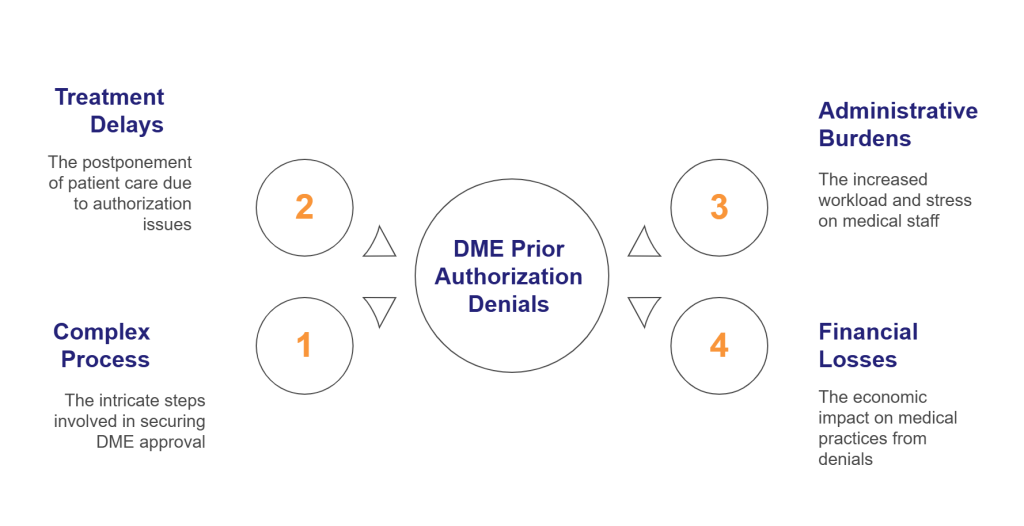
Durable Medical Equipment (DME) plays a critical role in patient care, but securing prior authorization for these items can be a complex and time-consuming process. Denials can lead to delays in treatment, increased administrative burdens, and financial losses for medical practices. Understanding why DME prior authorizations get denied—and how to prevent these denials—can help medical practice administrators improve efficiency and patient satisfaction.
Top Reasons for DME Prior Authorization Denials
Why Understanding DME Prior Authorization Denials is Essential: Understanding Who Does Prior Authorizations for DME Before diving into the common prior authorization denial reasons, let’s set the stage. You’ve done everything by the book—submitted the request, dotted your i’s, crossed your t’s—yet the insurer still slaps a denial on it. Sound familiar? It happens more often than it should, and the reasons can be as frustrating as they are avoidable.
Let’s break down exactly why these denials occur and, more importantly, how to stop them before they start.
1. Lack of Medical Necessity Documentation: Many payers deny DME requests due to insufficient documentation supporting medical necessity. If the provided medical records do not clearly demonstrate why the equipment is essential for the patient’s condition, the request is likely to be rejected. To prevent this, practices must ensure that physician notes explicitly state how the DME will improve the patient’s condition, align with insurance criteria, and be backed by diagnostic reports if required. Additionally, keeping up with evolving payer policies and preemptively addressing documentation gaps can reduce the risk of denials.
2. Errors in Patient or Provider Information: Inaccurate or incomplete patient details, incorrect provider credentials, or missing National Provider Identifier (NPI) numbers can lead to immediate denials. Even minor discrepancies, such as misspelled names or inaccurate insurance IDs, can delay processing. It’s like sending a package to the wrong address—if the details don’t match, it won’t get where it needs to go. Before submission, please verify that all patient data is entered exactly as it appears on insurance records. A small typo or missing digit in an NPI can force an unnecessary resubmission, adding days or weeks to the process. Double-checking the details upfront can save major headaches later.
3. Failure to Meet Payer-Specific Requirements: Different insurance companies have unique guidelines regarding which DMEs require prior authorization and what criteria must be met. Submitting requests without understanding a payer’s specific rules often leads to automatic denials.
4. Expired or Missing Prior Authorization: Some DMEs require reauthorization after a certain period. Practices may receive denials if the prior authorization approval has expired or if they fail to obtain initial approval before providing the equipment. It’s like trying to use an expired passport—you won’t get very far. Implementing a tracking system for authorization expiration dates can prevent unnecessary denials. Staff should review upcoming expirations weekly and submit renewal requests ahead of time to avoid disruptions in patient care. A proactive approach can save time, reduce stress, and keep equipment approvals on track.
5. Coding Errors and Mismatched Diagnoses: Incorrect CPT, HCPCS, or ICD-10 codes can cause payers to reject prior authorization requests. If the diagnosis does not align with the requested DME, the likelihood of denial increases.
6. Duplicate or Unverified Requests: Submitting duplicate authorization requests or failing to verify whether an approval is already in place can cause unnecessary delays. Many medical practices outsource DME prior authorization to specialized services to avoid such errors. Some insurers flag repeated requests as potential fraud, leading to further complications. It’s like ordering the same meal twice and getting charged both times—frustrating and avoidable. Before resubmitting, practices should implement a tracking system to confirm if authorization is pending. If a request has been denied, understanding the reason before submitting it again can prevent unnecessary work and cut down on processing time.
7. Lack of Supporting Documentation from Referring Physicians: Some DMEs require additional medical notes, test results, or prior treatments to justify their necessity. Payers may deny the request if referring physicians fail to provide these supporting documents.
How to Avoid DME Prior Authorization Denials
By now, it’s clear that prior authorization denials can be a real thorn in the side of medical practices. The good news? Most denials aren’t set in stone—they can be prevented with the right approach. “Think of it like dodging potholes on a bumpy road: you can steer clear if you know where they are.”
Here is how to keep those denials minimum and approvals rolling in:
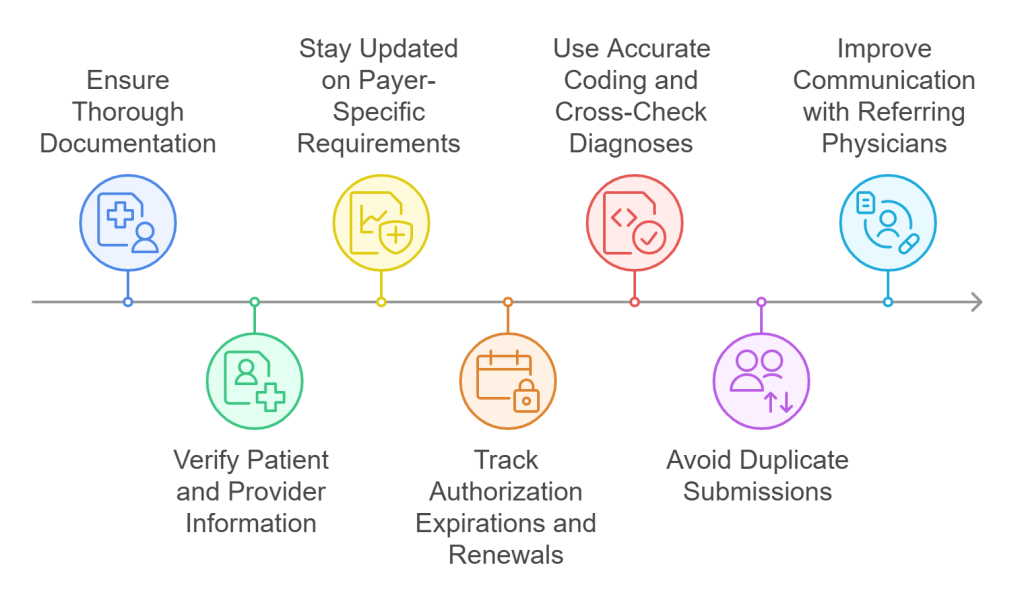
- Ensure Thorough Documentation: Work closely with providers to verify that medical necessity is thoroughly documented. A vague diagnosis or a one-liner about patient needs won’t cut it—payers want specifics. Include a detailed patient history, clear clinical notes, and any supporting tests or treatment plans that justify the equipment. Think of it like a courtroom argument—if you don’t present solid evidence, the case gets tossed out. Providing comprehensive documentation upfront can prevent time-wasting appeals and resubmissions.
- Verify Patient and Provider Information Before Submission: Patient details, insurance information, and provider credentials must be accurate before submission. Think of it like filling out a travel visa—one small mistake, and you’re stuck at the gate. Insurance companies have zero patience for errors, so take a few extra moments to confirm names, policy numbers, and NPIs match official records. A misplaced digit or typo can derail the entire process, leading to unnecessary delays and frustrated patients.
- Stay Updated on Payer-Specific Requirements: Tracking insurer policies for DME prior authorization is like managing a constantly shifting playbook—if you’re not up to date, you’re setting yourself up for unnecessary penalties. Assigning a team member to monitor payer guidelines, flag changes, and update internal records can prevent costly missteps. Even a minor tweak in requirements can mean the difference between an approved and a rejected request. A well-maintained reference system allows staff to pull the right documentation without second-guessing requirements.
- Track Authorization Expirations and Renewals: Think of prior authorization expirations like milk in your fridge—if you don’t check the date, you’re bound to have a sour surprise. Implement a system to monitor expiration dates and schedule renewal requests before they lapse. A simple spreadsheet or automated reminder can prevent costly disruptions. Assign a staff member to run weekly checks, flag upcoming expirations, and submit renewals. This small step keeps patient care moving without unnecessary delays.
- Use Accurate Coding and Cross-Check Diagnoses: Train staff on proper CPT, HCPCS, and ICD-10 coding practices so that submitted codes match payer requirements. Think of coding like dialing a phone number—one wrong digit, and you won’t get through. Payers expect precision, and mismatched codes send up red flags that lead to rejections. Regular training sessions, coding audits, and access to up-to-date coding resources help prevent costly mistakes and keep claims moving through the system without hiccups.
- Avoid Duplicate Submissions: Develop an internal tracking system to prevent unnecessary resubmissions and confirm whether an authorization has already been approved.
- Improve Communication with Referring Physicians: Getting documentation from referring providers shouldn’t feel like chasing a runaway balloon. Understanding what DME stands for, as Durable Medical Equipment requires thorough documentation. Set up a transparent system for requesting, tracking, and following up on missing paperwork. Use a shared checklist or electronic reminders to keep everything moving. A quick phone call or automated email can nudge slow responders. When providers know what’s needed upfront, approvals happen faster, and everyone avoids the last-minute scramble.
Streamlining the DME Prior Authorization Process
Medical practices that proactively address these common reasons for denial can significantly reduce administrative burdens and enhance patient care.
Partnering with a specialized prior authorization service like DataMatrix Medical can further streamline the process. Ensuring faster approvals and fewer denials with specialized processes. By implementing these best practices, your practice can avoid unnecessary delays, reduce staff workload, and improve overall efficiency in handling DME prior authorizations.


Nathaniel Smathers is the VP of Client Education and Marketing. He is also a long time contributor of the DataMatrix Medical blog and has a background in healthcare content creation for over a decade. Nathaniel is passionate about exploring the intersections of healthcare, data analysis, and digital innovation.