You’ve probably heard the hype: AI is revolutionizing healthcare. It’s faster, cheaper, and supposedly smarter. But here’s the kicker: AI is more often an obstacle than a solution when it comes to prior authorizations.
The integration of artificial intelligence by insurance providers has introduced new complexities into the prior authorization process. While AI promises efficiency, its application in this context has increased denials, raising concerns among physicians and patients alike.
In this article, we want to expand on what is happening and, more importantly, why a human expert is still the best bet for getting prior authorization approvals across the finish line.
The Surge of AI-Induced Denials
Insurance companies are doubling down on AI-driven denials, leaving doctors drowning in paperwork and patients stuck waiting for care they desperately need. A recent AMA survey found that 61% of physicians believe AI makes prior authorization even more of a nightmare. Some insurers’ AI tools deny requests at a rate 16 times higher than traditional methods. If that doesn’t set off alarms, we don’t know what will.
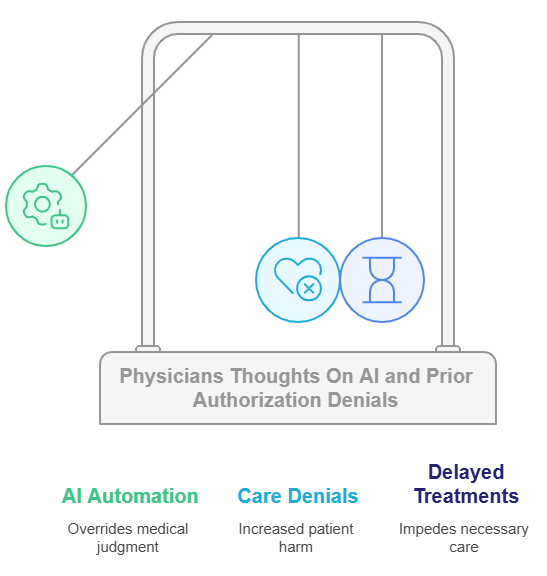
Read the Full AMA Article Here
Let’s break down why this is happening and, more importantly, why a human expert is still the best bet for getting approvals across the finish line.
Understanding the Root Causes of Denials
Prior authorization denials can stem from various factors, including:
- Algorithmic Limitations: AI systems may rely on generalized data that doesn’t capture unique patient circumstances, leading to inappropriate denials.
- Lack of Contextual Judgment: Automated tools might not account for the complete clinical picture, missing critical subtleties that a human specialist would recognize.
- Data Quality Issues: Inaccurate or incomplete patient data can result in erroneous AI assessments, adversely affecting authorization outcomes.
The Imperative Role of Human Specialists
So you have to ask the question: “If the medical insurance industry is increasing its use of AI tools, is the only way to get more approvals is to use a trained human specialist to combat the tools that objectively cause more authorization denials?” The answer is:
Yes.
Utilizing trained human specialists is one of the most effective ways to combat AI-driven prior authorization denials, mainly as insurers increasingly rely on automated systems. Human intervention, particularly by experienced prior authorization specialists, is crucial for several reasons:
- Understanding Clinical Nuance – AI models work based on predefined algorithms and historical data but may not account for unique patient circumstances or evolving medical guidelines. A trained specialist can apply evidence-based clinical reasoning to argue against inappropriate denials.
- Challenging Unjust Denials – Many AI-driven denials can be overturned on appeal when a human specialist presents a well-documented case, including supporting medical records and physician justification. Without such advocacy, patients may face unnecessary delays or denials of essential care.
- Navigating Complex Insurance Policies – Every insurer has different policies, exceptions, and approval criteria. A skilled prior authorization expert understands how to interpret and work within these frameworks to maximize approval rates.
- Ensuring Compliance and Patient Advocacy – AI models are largely unregulated, and without human oversight, they may operate without transparency. Prior authorization specialists can ensure that payers comply with existing regulations and advocate for patient rights.
AI might spot patterns, but a trained human can argue the case.
If you’re a practice administrator, you probably think, “Well, then I will deploy my own AI to combat the insurer’s AI.” Sounds like a solid move, right? Not so fast.
The “Spy vs. Spy” Dynamic: Antagonistic AI Systems
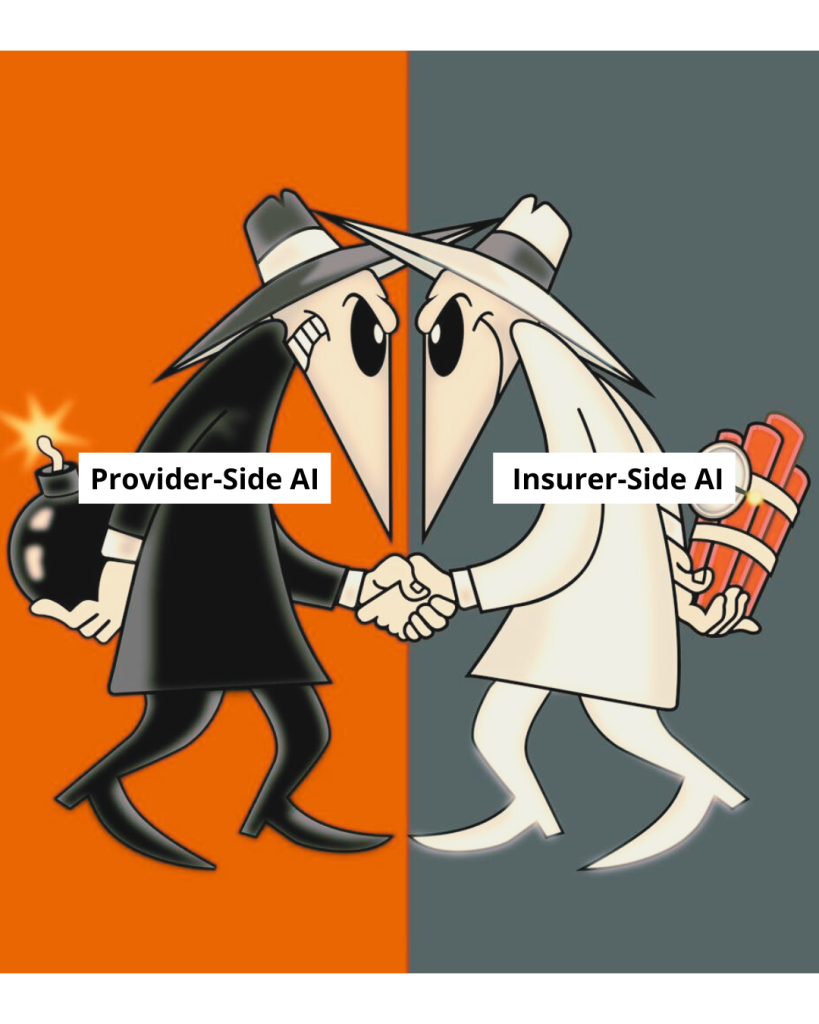
The deployment of AI by both insurers and healthcare providers has led to an “antagonistic AI” scenario. In this dynamic, provider-side AI tools aim to craft authorization requests likely to be approved, while insurer-side AI seeks to identify and deny claims deemed unnecessary. This back-and-forth can create a cycle where each system continuously adapts to outmaneuver the other, potentially leading to increased administrative burdens and delayed patient care.
Even the best AI can’t negotiate, appeal, or explain why a treatment is medically necessary. At some point, a human needs to step in and take control.
The Real Solution
Technology has a place in prior authorization, but it’s a tool, not a replacement. AI can speed up paperwork, suggest optimizations, and even flag potential errors. But when dealing with insurers, humans still run the show.
The AMA emphasizes that medical decisions must prioritize patient welfare over automated protocols. Ensuring that AI applications in prior authorization are transparent, evidence-based, and subject to human review is crucial for maintaining the integrity of patient care.
Now [insert shameless plug] DataMatrix Medical prioritizes this balance. Our trained specialists don’t just submit forms—they outthink the system, using experience and real-world understanding to cut through the noise. AI can help with the heavy lifting, but it takes human strategy to get approvals that actually stick, and that’s what you should expect when you outsource prior authorizations.
Final Word
To be clear, WE ARE NOT ANTI-AI. We are PRO-HUMAN when it comes to our healthcare clinics and their patients.
AI is here to stay, and medical AI agents will continue to increase their accuracy and efficiencies, but that doesn’t mean they should have the final say on patient care. If insurers want to automate denials, medical practices need real specialists who can push back.

Nathaniel Smathers is the VP of Client Education and Marketing. He is also a long time contributor of the DataMatrix Medical blog and has a background in healthcare content creation for over a decade. Nathaniel is passionate about exploring the intersections of healthcare, data analysis, and digital innovation.